In 2025, the Faculty of Foreign Philology at Lesya Ukrainka Volyn National University enrolled its first master's students in the “Interpreting” educational program. Before this, a modern simultaneous interpreting laboratory was opened, thanks to Rector Anatoliy Tsos's assistance.
The new program was a response to modern challenges in philological education. Its aim is to raise specialist training in Volyn to European standards. The strategic focus is to build professional contacts with institutions within key EU bodies responsible for multilingual and multicultural communication, such as the European Commission and the European Parliament.
The new educational program is both a challenge and a source of pride for foreign language education in Volyn. The first intake brought motivated young people and leading teachers together around the idea of a practical reorientation of philology training. The priority was to align foreign-language teaching and translation standards with the high standards of European institutions. Scientific and pedagogical workers see direct contact with institutions responsible for training highly qualified simultaneous interpreters for the European Commission and the European Parliament as key to the program's development.
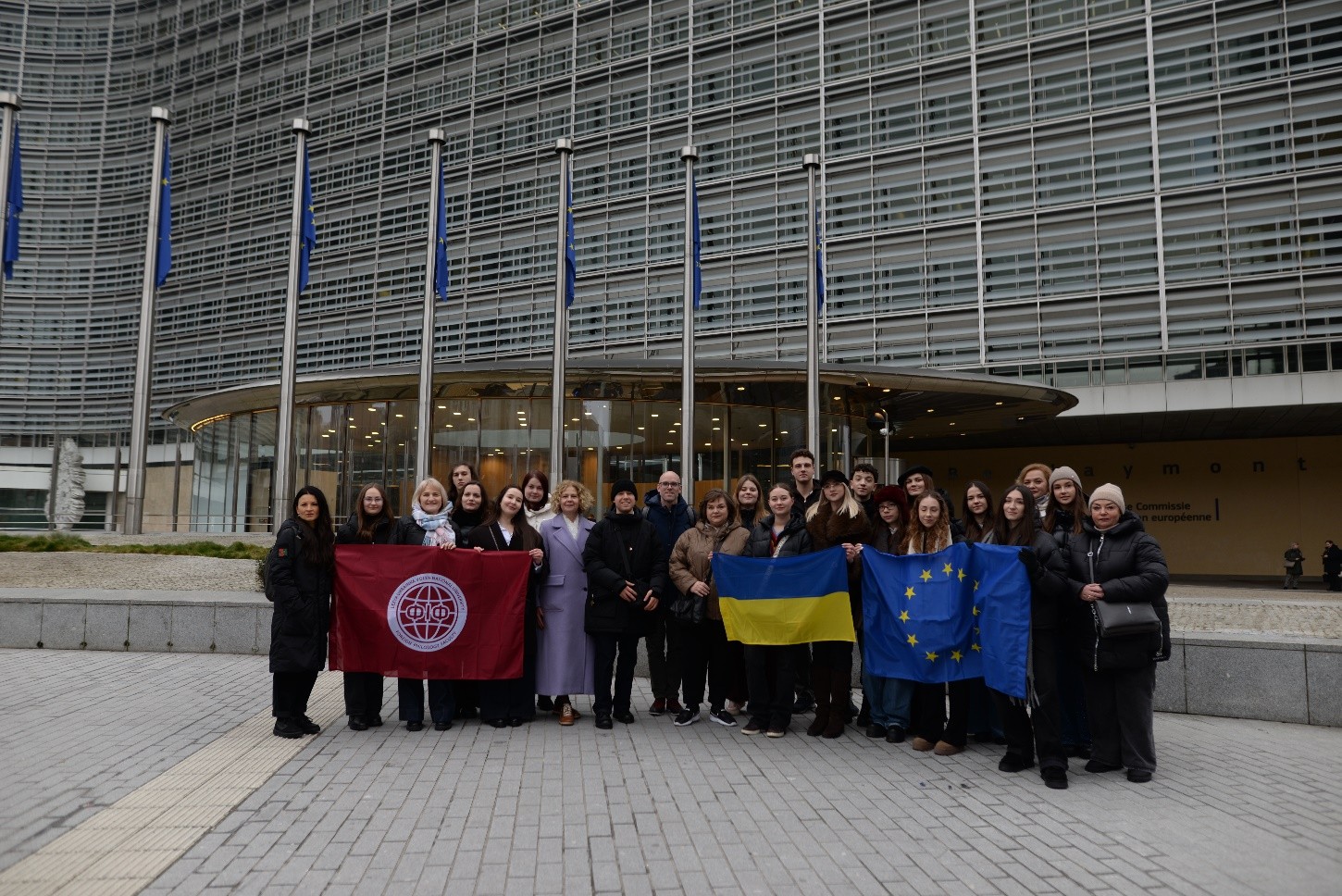
The first significant step towards institutional cooperation was a study visit by a university delegation to Brussels in January 2026. The trip was organized by a group of academic staff from the Faculty of Foreign Philology: dean, professor Iryna Biskub; educational programme guarantor, Associate Professor Iryna Charikova; educational programme lecturers, associate professors Kateryna Honchar, Oksana Belykh, and Yulia Kryukova.
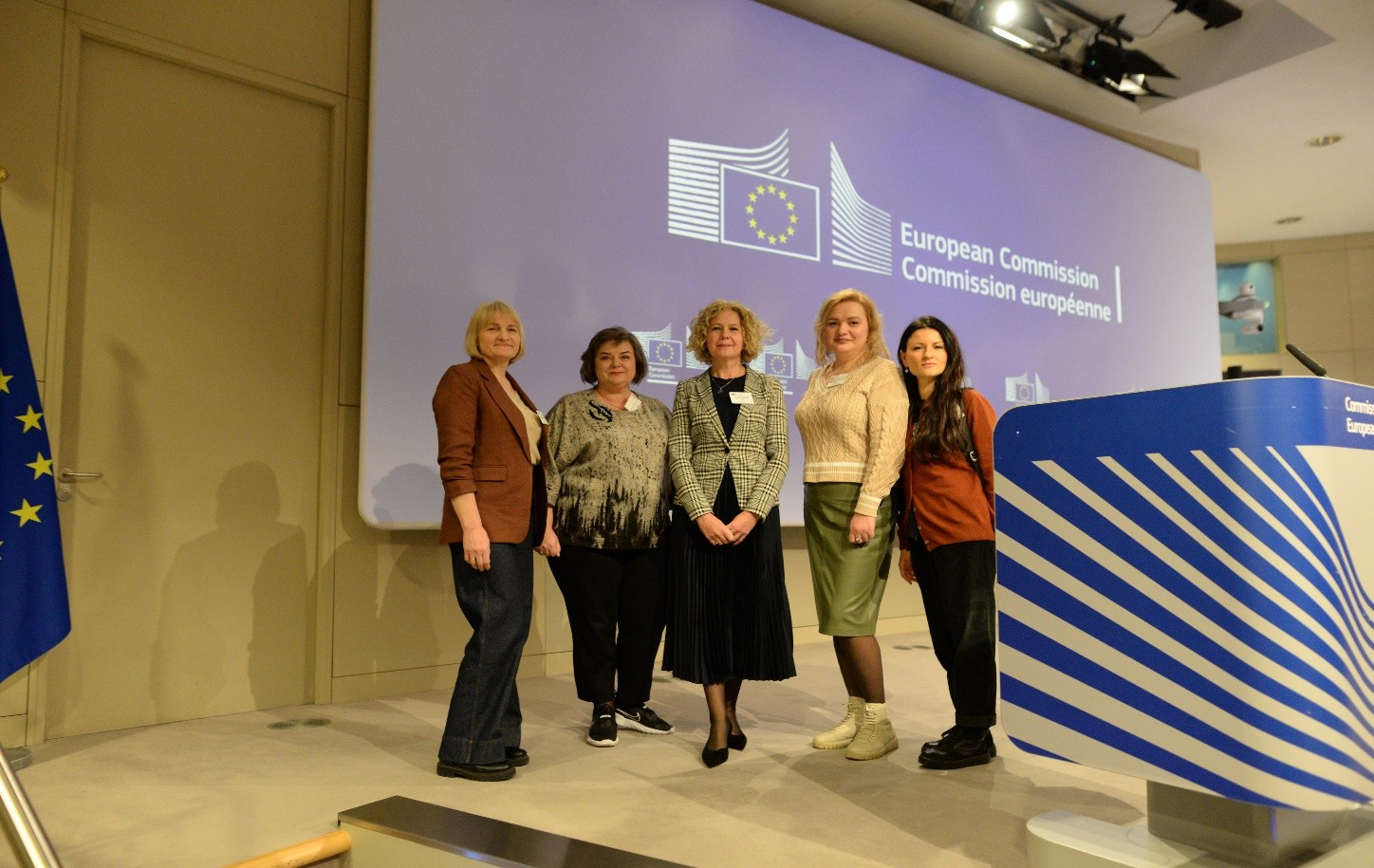
The delegation comprised 17 master's and fourth-year students who demonstrated a strong interest in the interpreting profession. In January 2026, these students experienced firsthand the validity of Umberto Eco's assertion: “The language of Europe is translation.” Brussels, recognized as the multilingual center of the continent and host to 24 official languages, served as a focal point for the highest standards in interpreting for aspiring professionals.
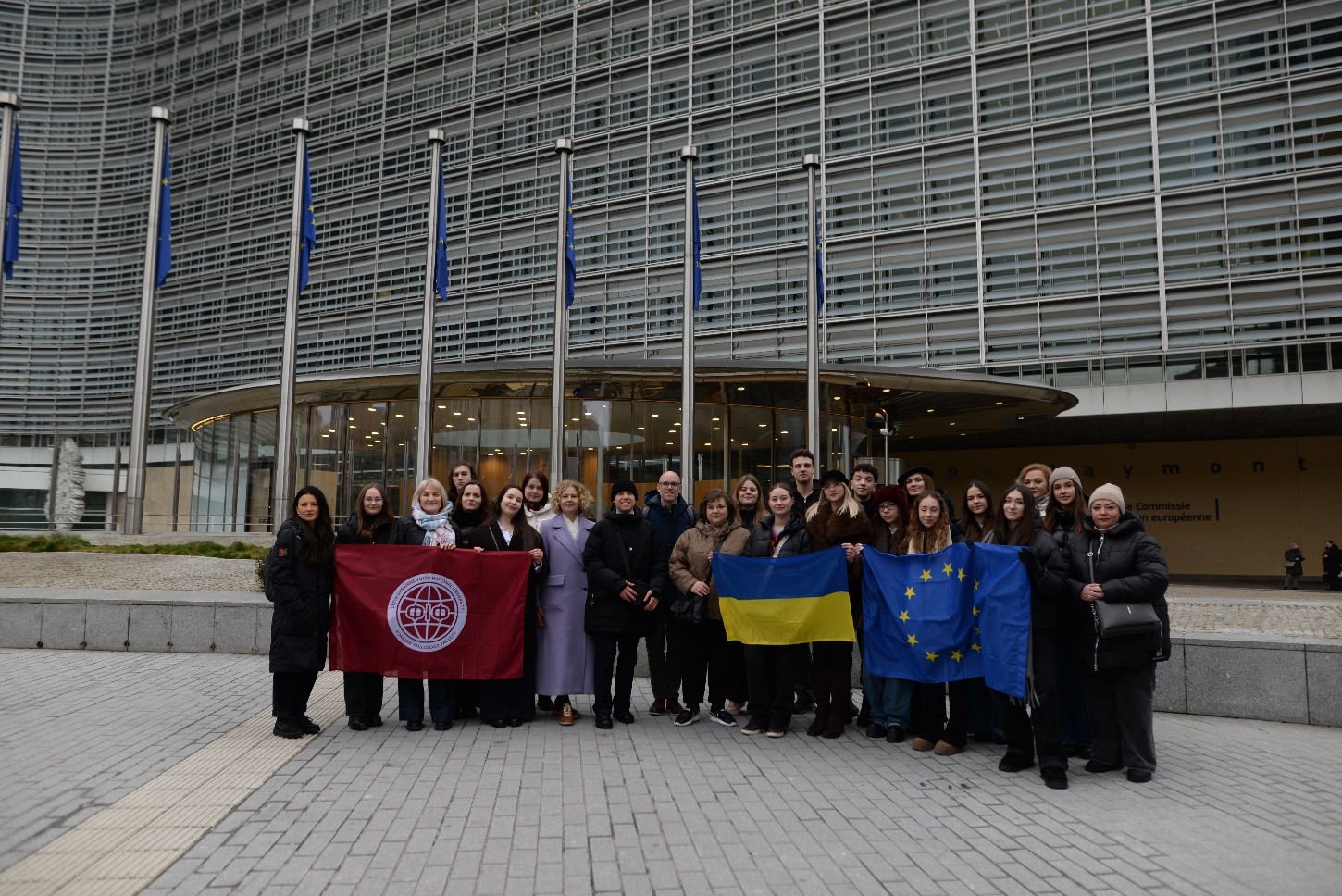
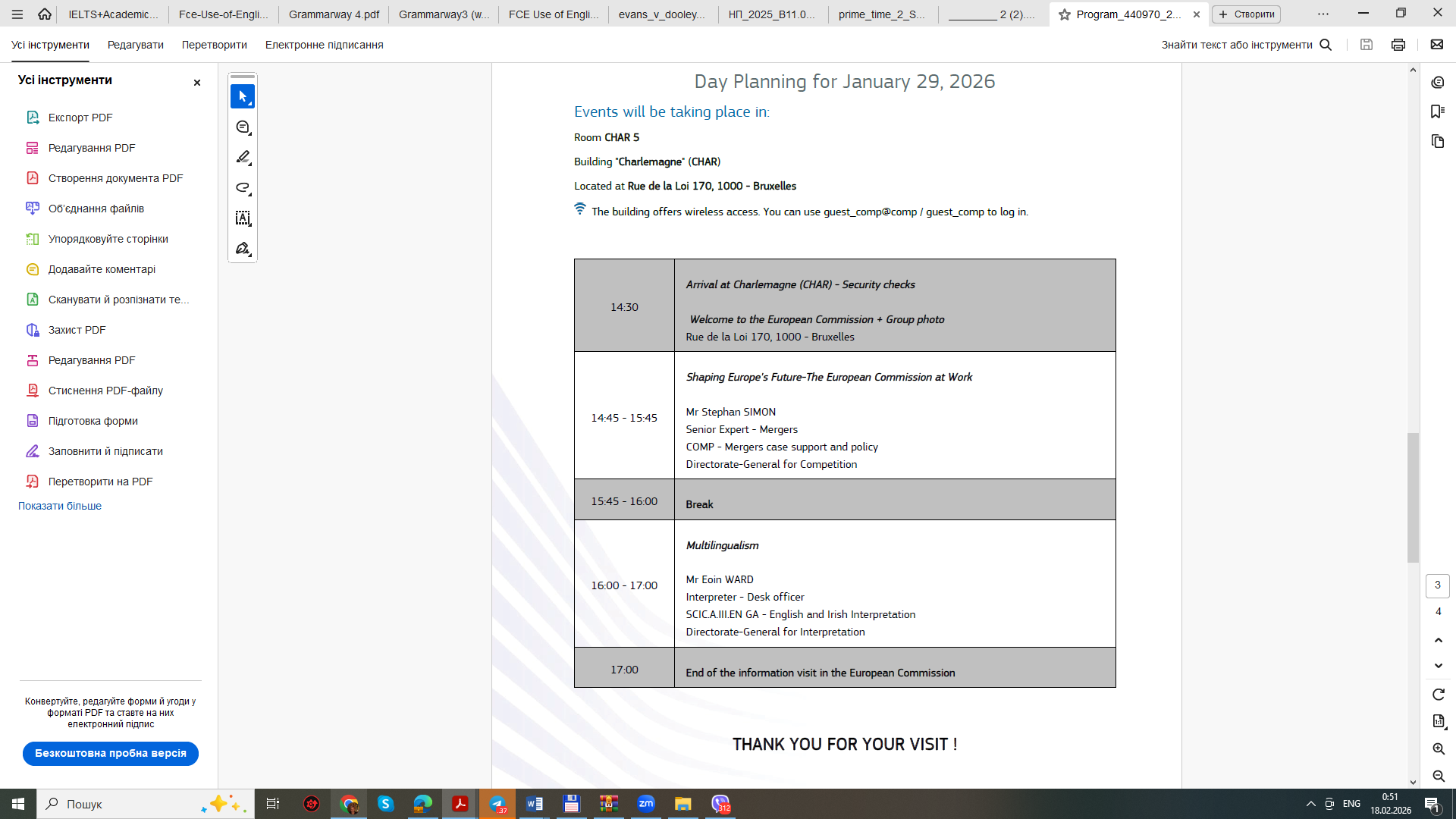
According to the official program, the visit took place in the Charlemagne building (CHAR), located at Rue de la Loi 170. The delegation's working day was filled with expert lectures and practical discussions on subjects such as policy coordination, European regulatory frameworks, implementation strategies, and multilingualism:
11:30 a.m. – Visit to the European Commission's press center during the official briefing of European Commissioners. The visit coordinator, interpreter Owen Ward, shared his invaluable experience: from the specifics of working in the booth to the principles of professional ethics and teamwork. Students had the opportunity to observe the work of conference interpreters in real time, when speed of thought and accuracy of wording become critically important. What is practiced as an exercise in university classrooms became a professional reality here: instant decision-making, balance between content and form, and psychological stability.
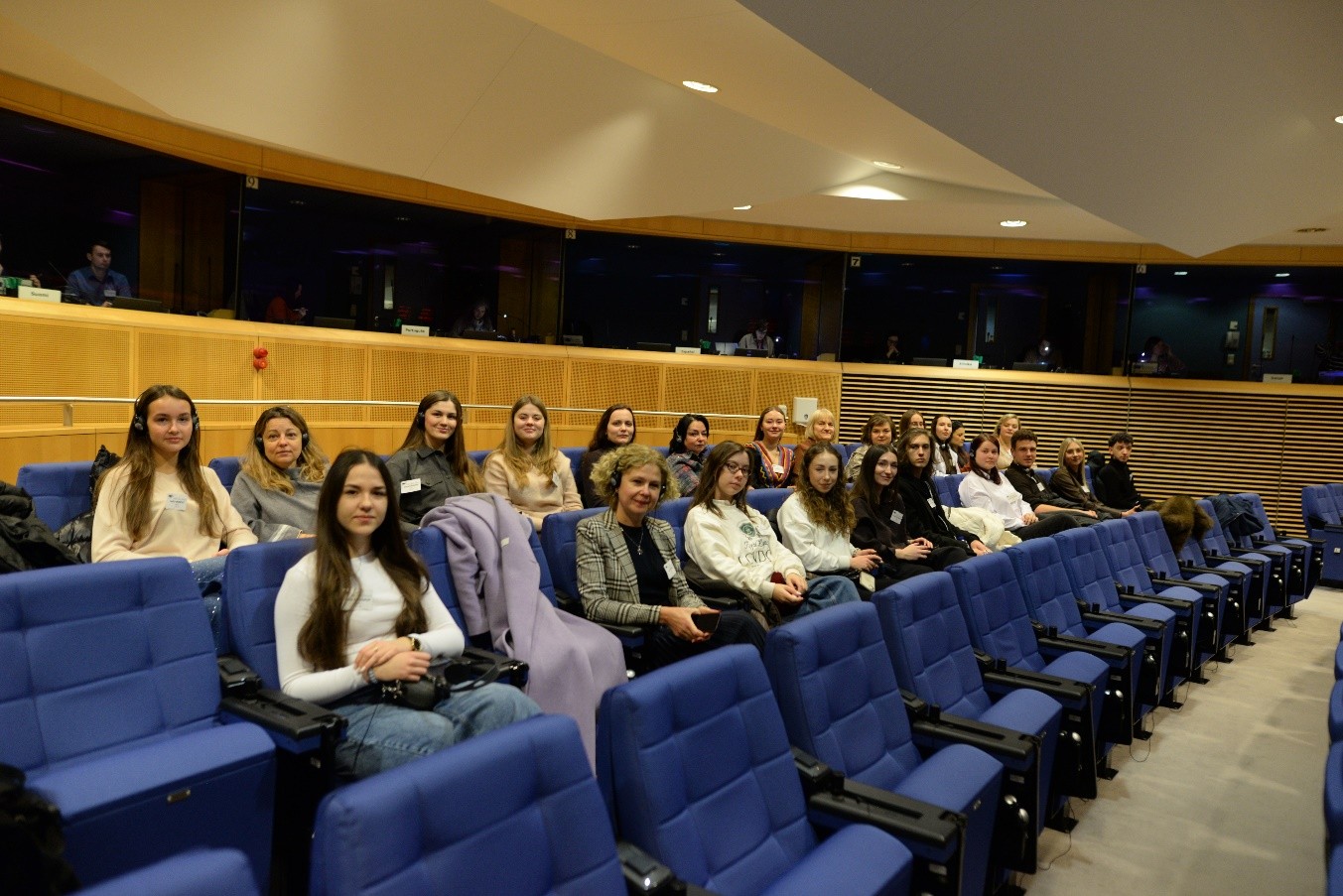
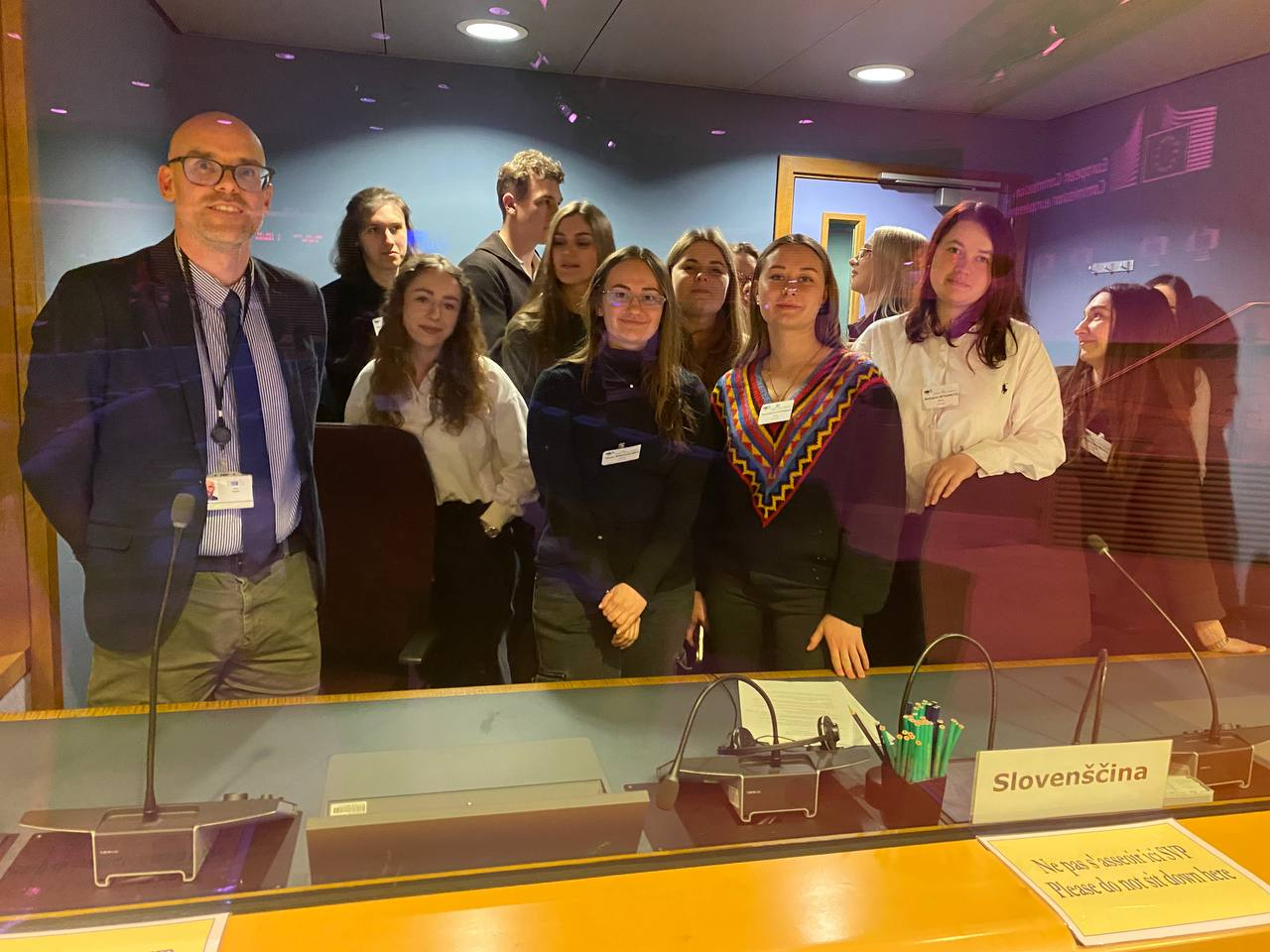
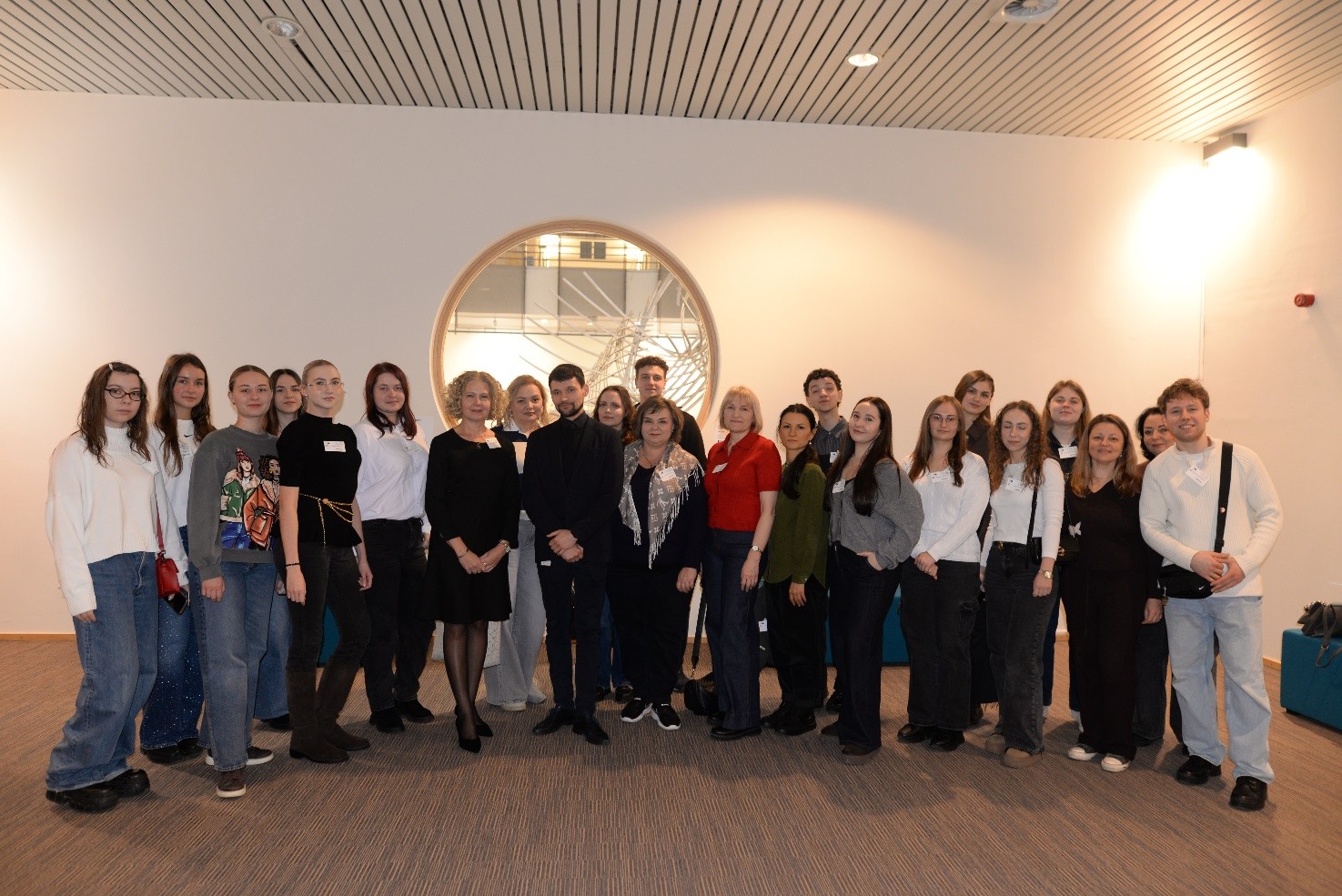
– 14:30 – Official welcome: After passing through security procedures, a solemn welcome ceremony for the Ukrainian delegation took place at the European Commission, followed by the traditional group photo.
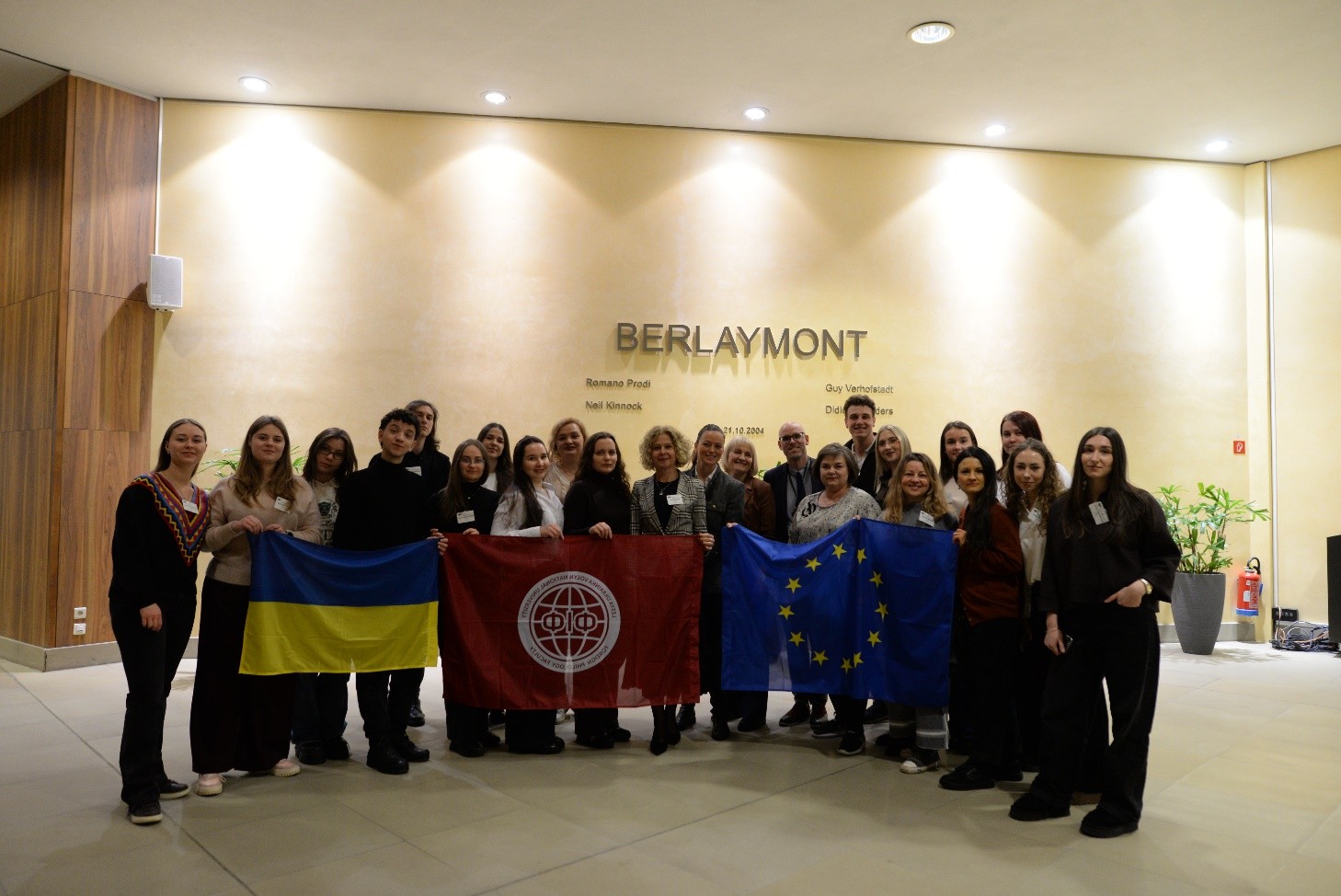
– 14:45 – 15:45 – Panel discussion “Shaping the Future of Europe: The European Commission in Action”: Speaker Stefan Simon, Senior Merger Expert (Directorate-General for Competition). Students learned about the mechanisms of the Commission's functioning, its support for competition policy, and its role in building a common economic and political space.
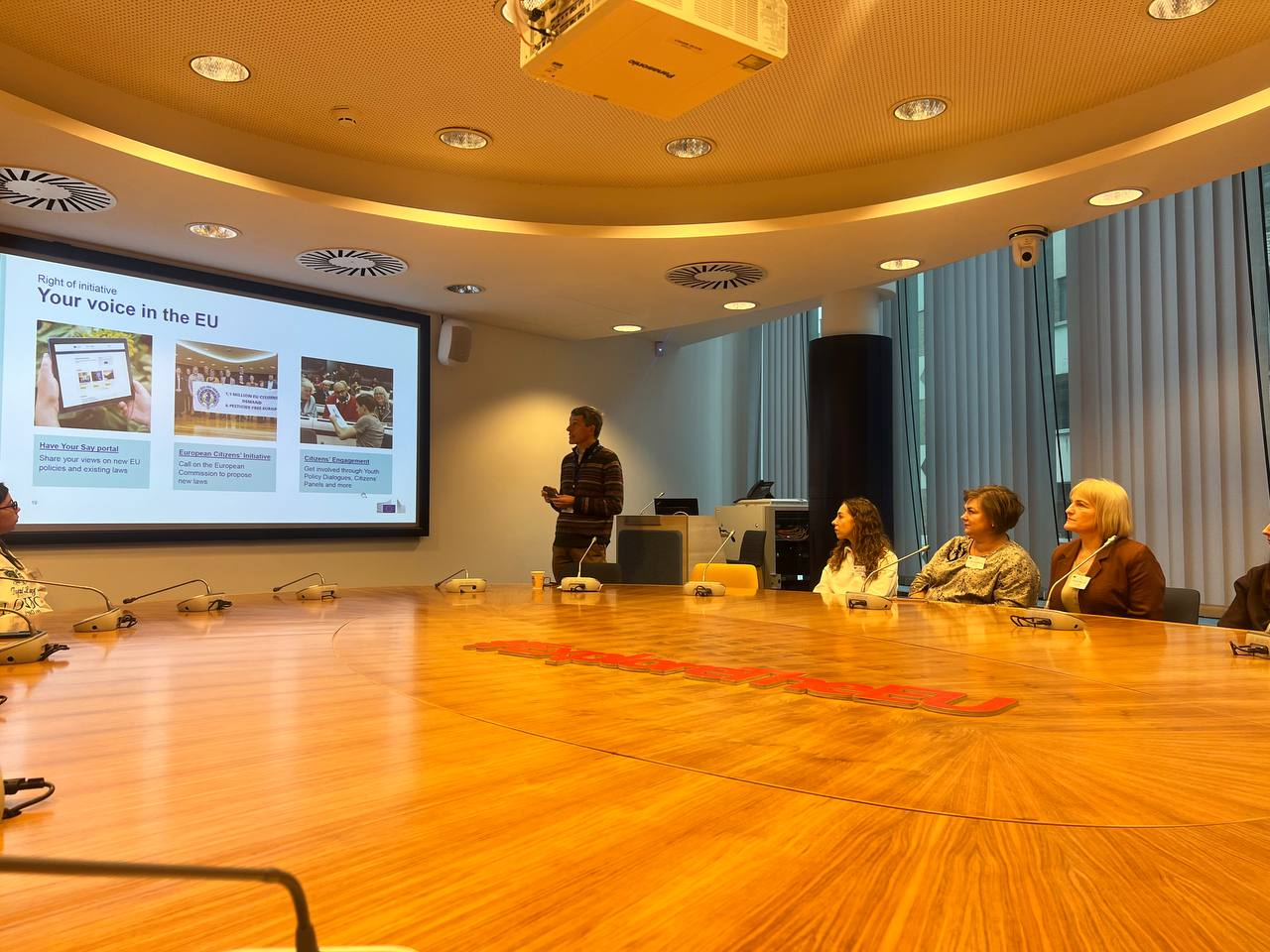
– 16:00 – 17:00 – Multilingualism section: This section was key for future interpreters. The visit coordinator, active conference interpreter, and desk officer, Owen Ward (DG SCIC), presented the work of the English and Irish interpreting department. The discussion focused not only on linguistic aspects but also on the complex logistics of ensuring multilingualism in the EU, where dozens of language combinations are used daily.
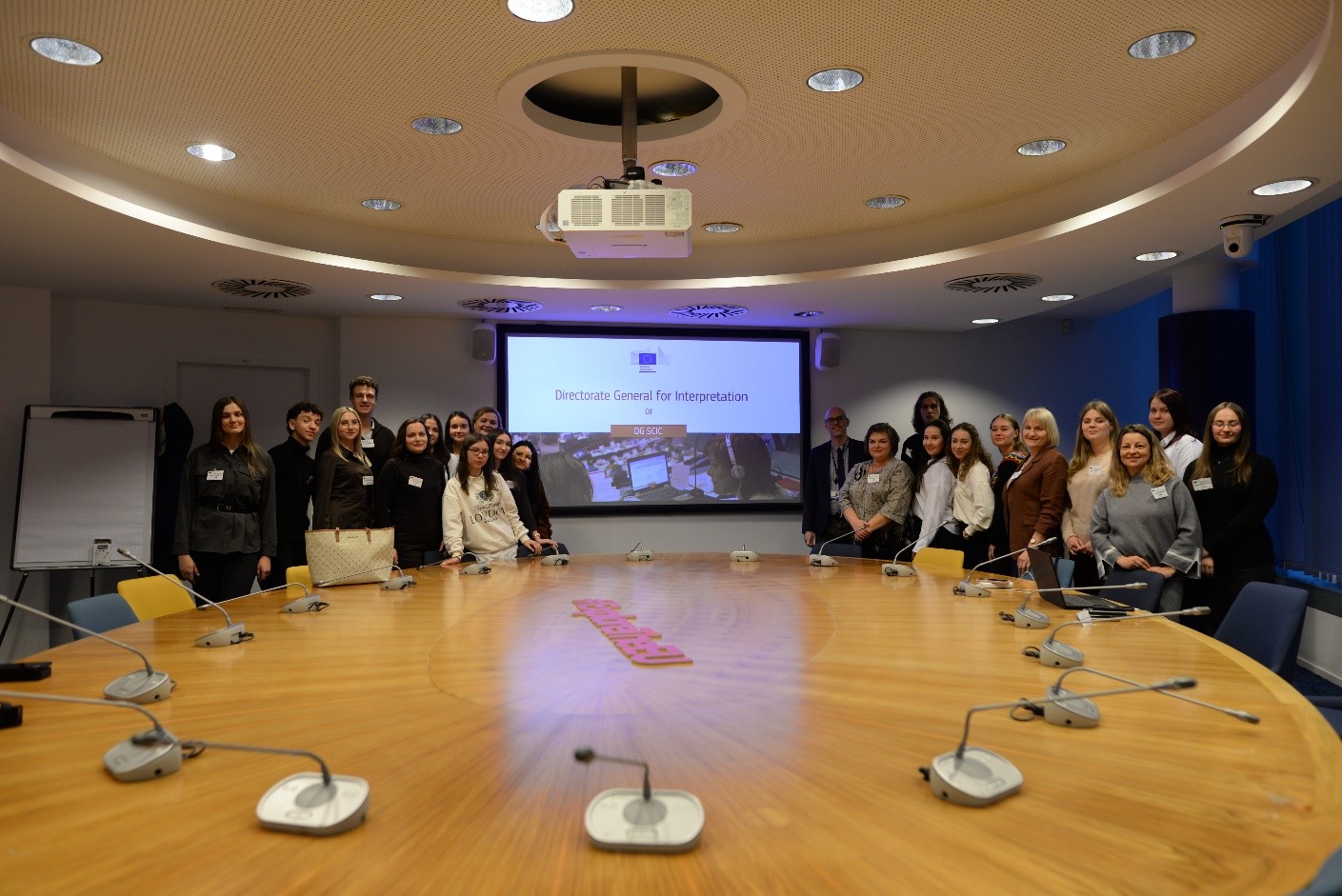
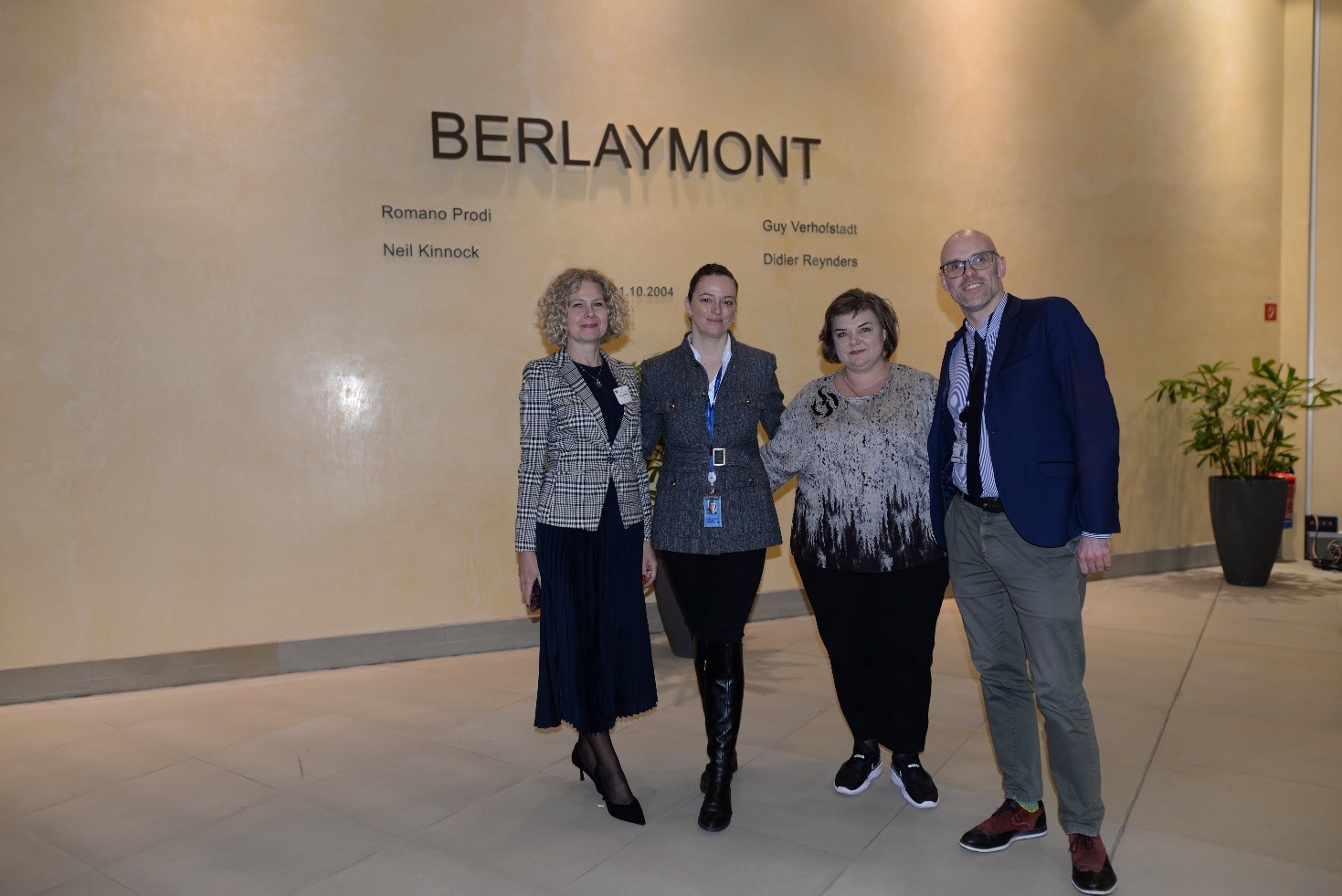
The meeting with interpreter Anastasia Koka (DG LINC) was impactful for students, as her professional history in the European Parliament inspired them. She described the competitive procedures, requirements for the EU interpreter accreditation exam, and internship opportunities for young professionals from Ukraine.
The following day, participants visited the European Parliament, where they had the opportunity to learn in detail about the decision-making processes of the European Union and to discuss the prospects for Ukraine's European integration. Particular attention was paid to the institution's role as a space for implementing the principles of procedural democracy, where each stage of work is clearly regulated, and multilingual communication is provided at the highest professional level.
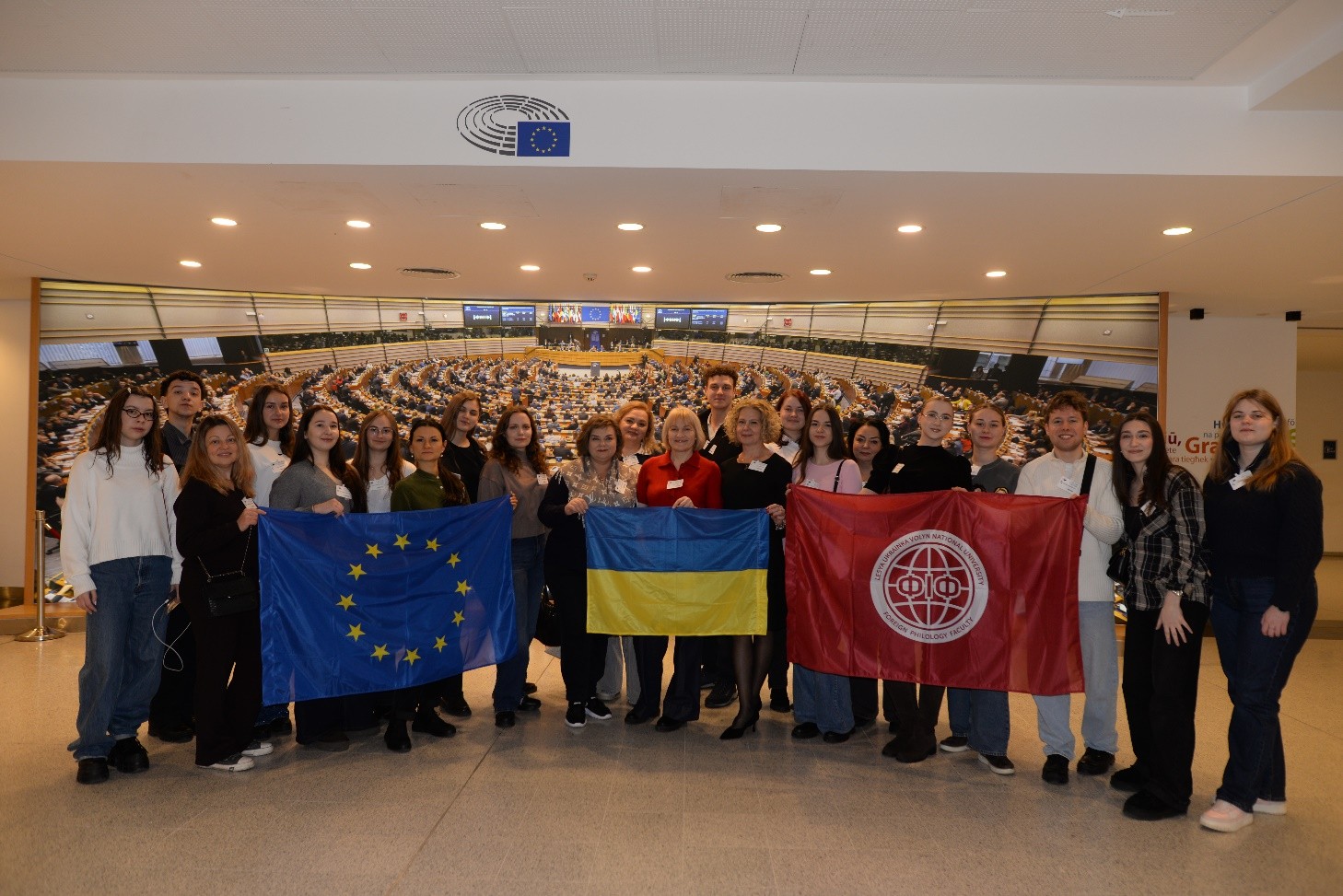
Discussions about Ukraine's future in the European Union focused on real political mechanisms and the practical activities of European institutions. For students in the Interpreting program, this experience was important. It helped them understand how to work with the language of official decisions, regulatory documents, and political discourse.
The architecture of the plenary and committee rooms reflected the institution's importance. These spaces, along with the way work was organized, emphasized the responsibility and focus required to work effectively in an international environment.
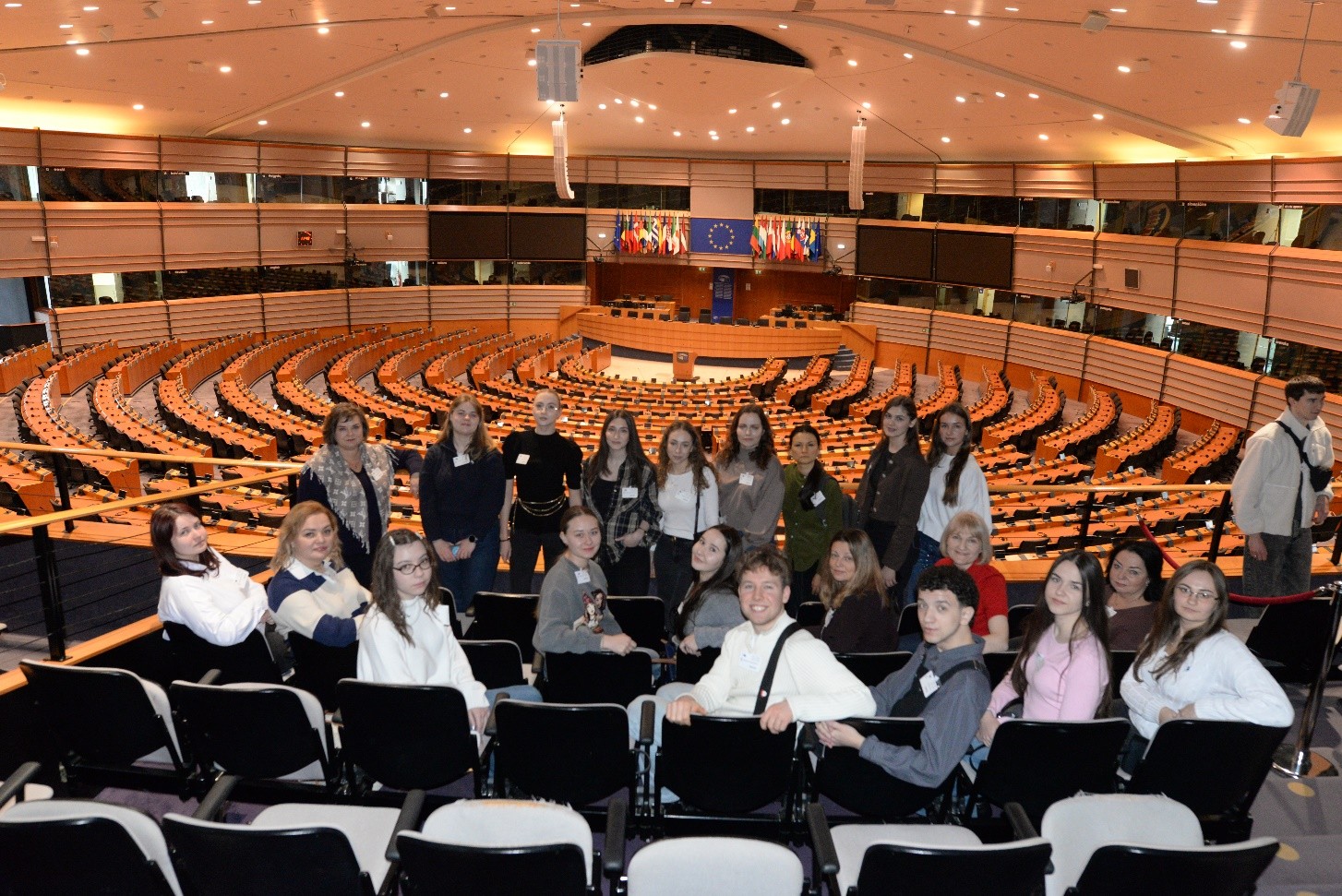
A special moment of the day in Parliament was a dialogue with Oleksandr Lazuka, a former Applied Linguistics graduate who is now an advisor to a member of the European Parliament. During the meeting, he shared practical advice on building an international career, outlined the requirements for specialists seeking to work in European institutions, and answered students' questions.
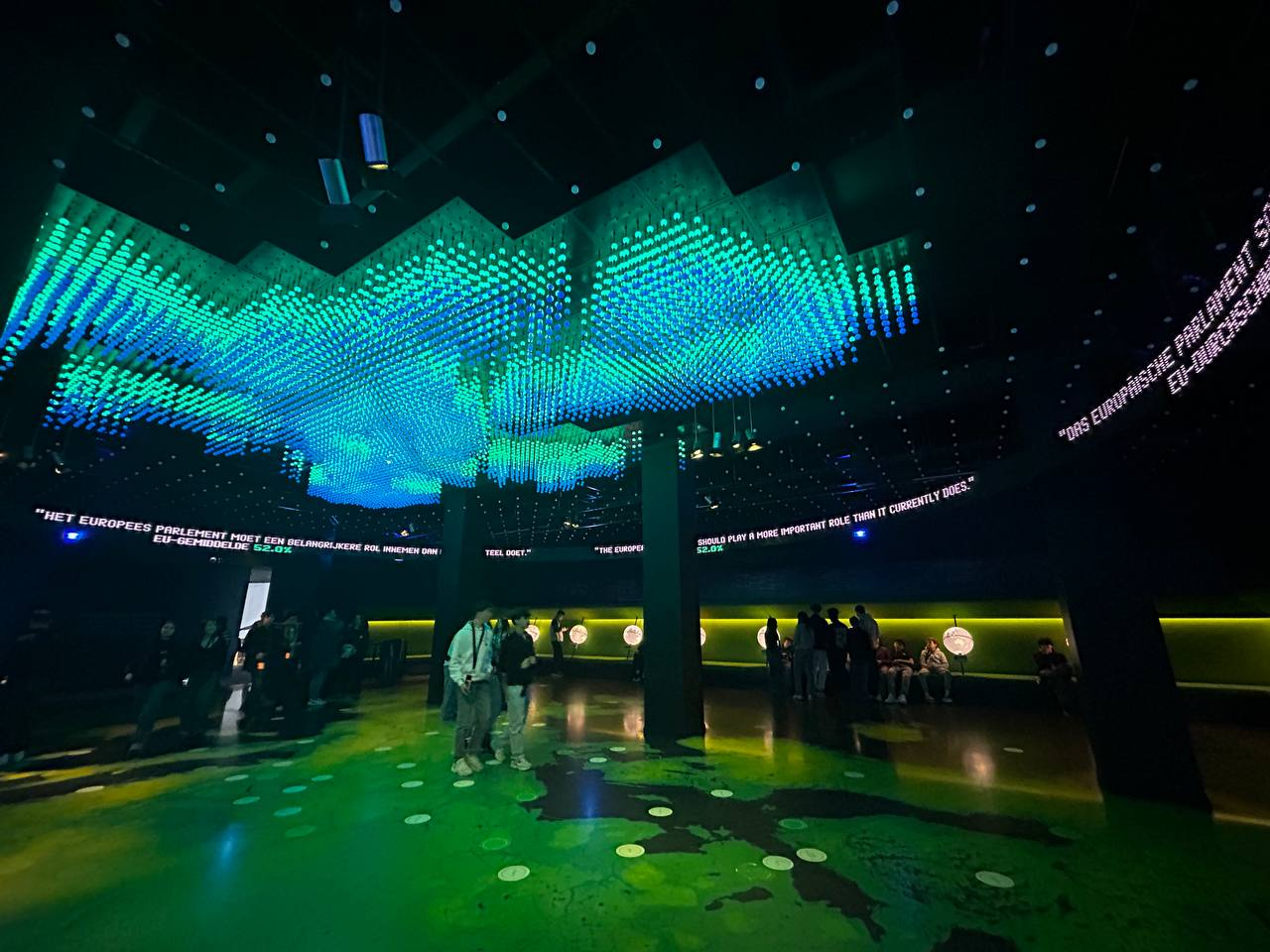
An important part of the trip was a visit to the Parlamentarium, a multimedia space where the history of European integration unfolds from the post-war ruins to the complex modern system of the EU. The experience of using a multimedia guide in any of the official languages was further proof that interpreting is not just a transfer of information, but a tool for ensuring democracy and respect for national identities.
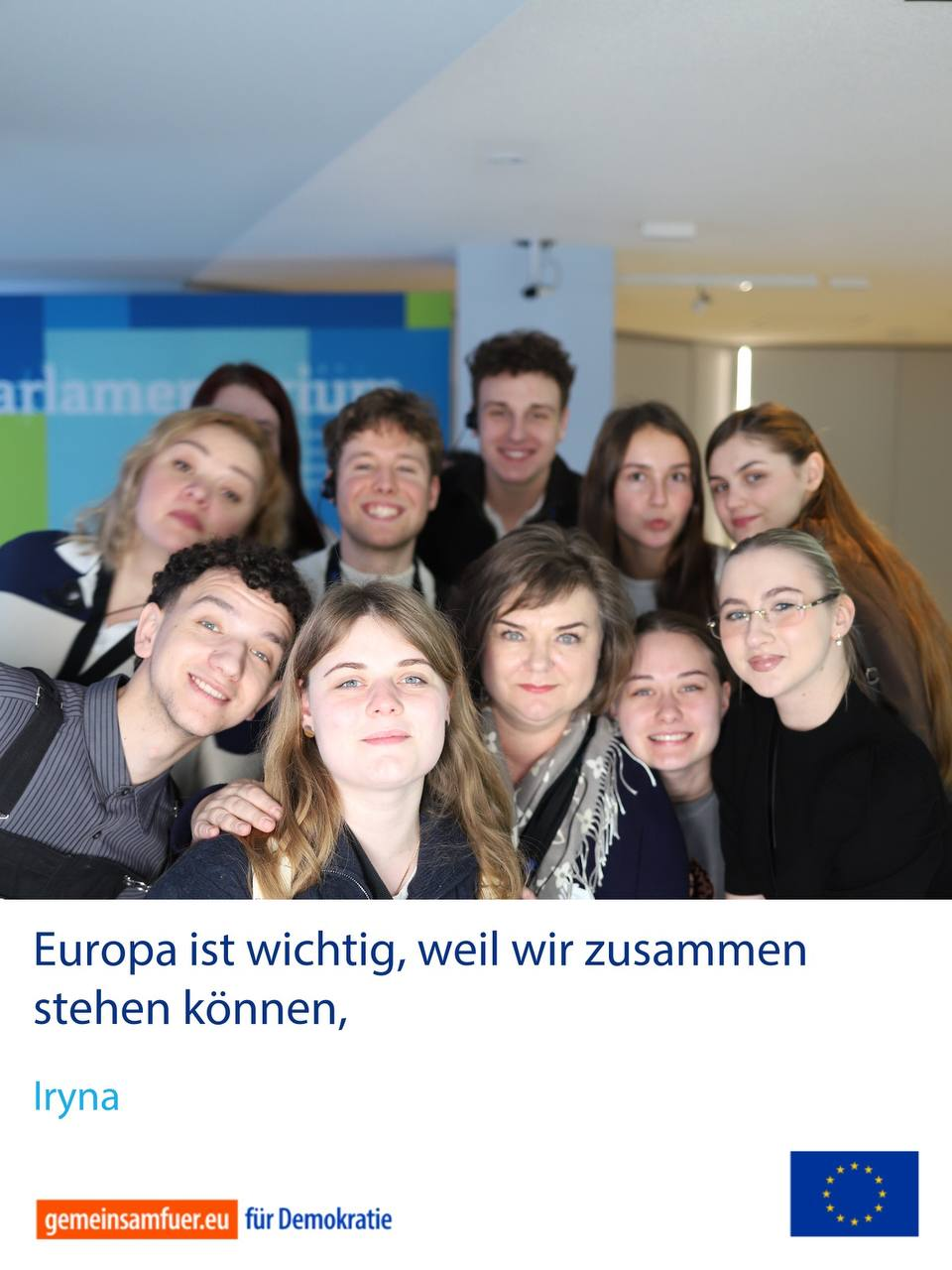
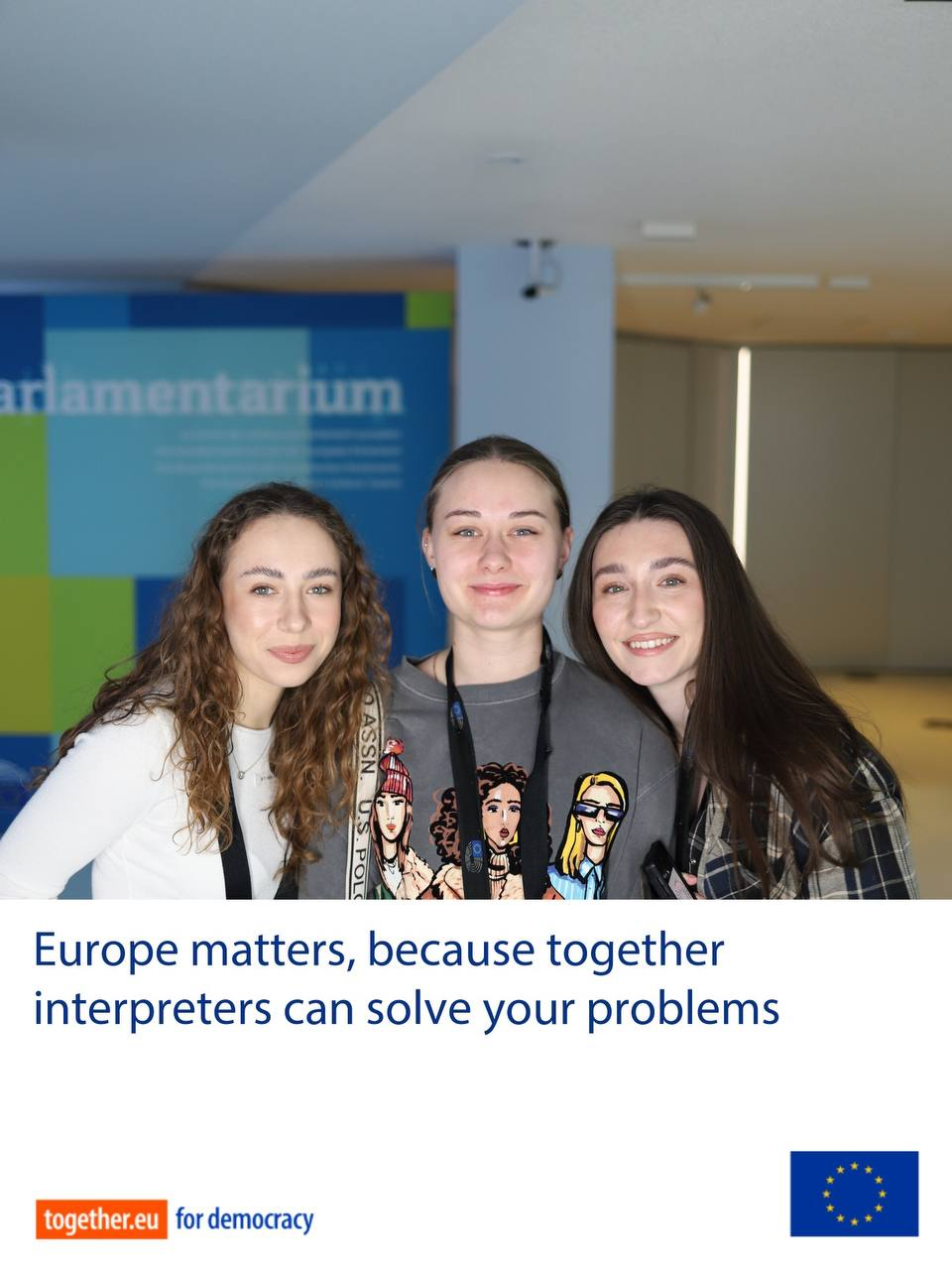
The study visit to Brussels proved that interpreting in a globalized world is a way of thinking and serving the idea of mutual understanding. For students of Lesya Ukrainka Eastern National University, this experience was a step towards professional maturity, allowing them to see the global scale of their chosen profession.
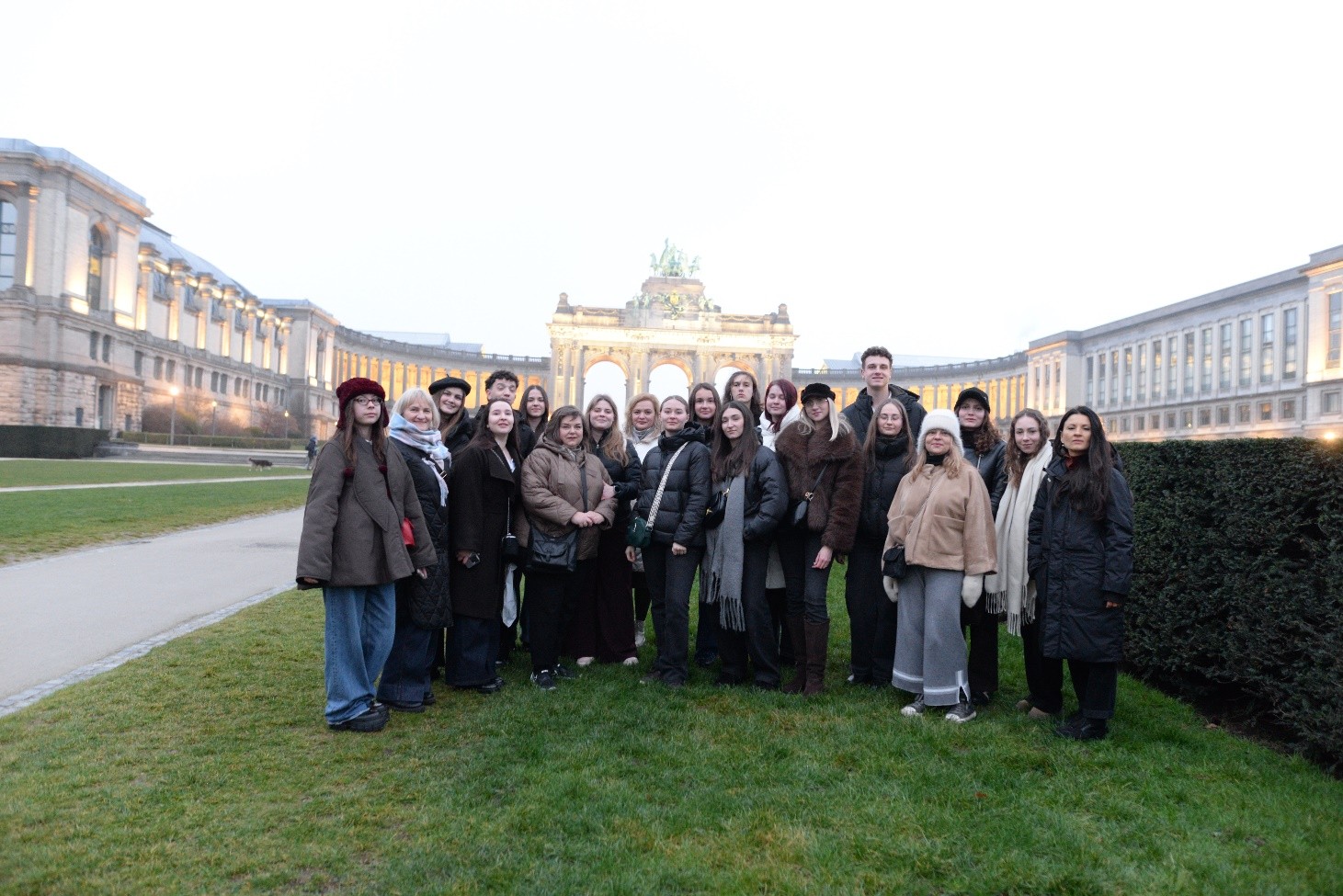
We believe that the knowledge and inspiration gained will help our graduates build Ukraine's future in accordance with the highest European standards, where every word translated with responsibility works for peace and cooperation.
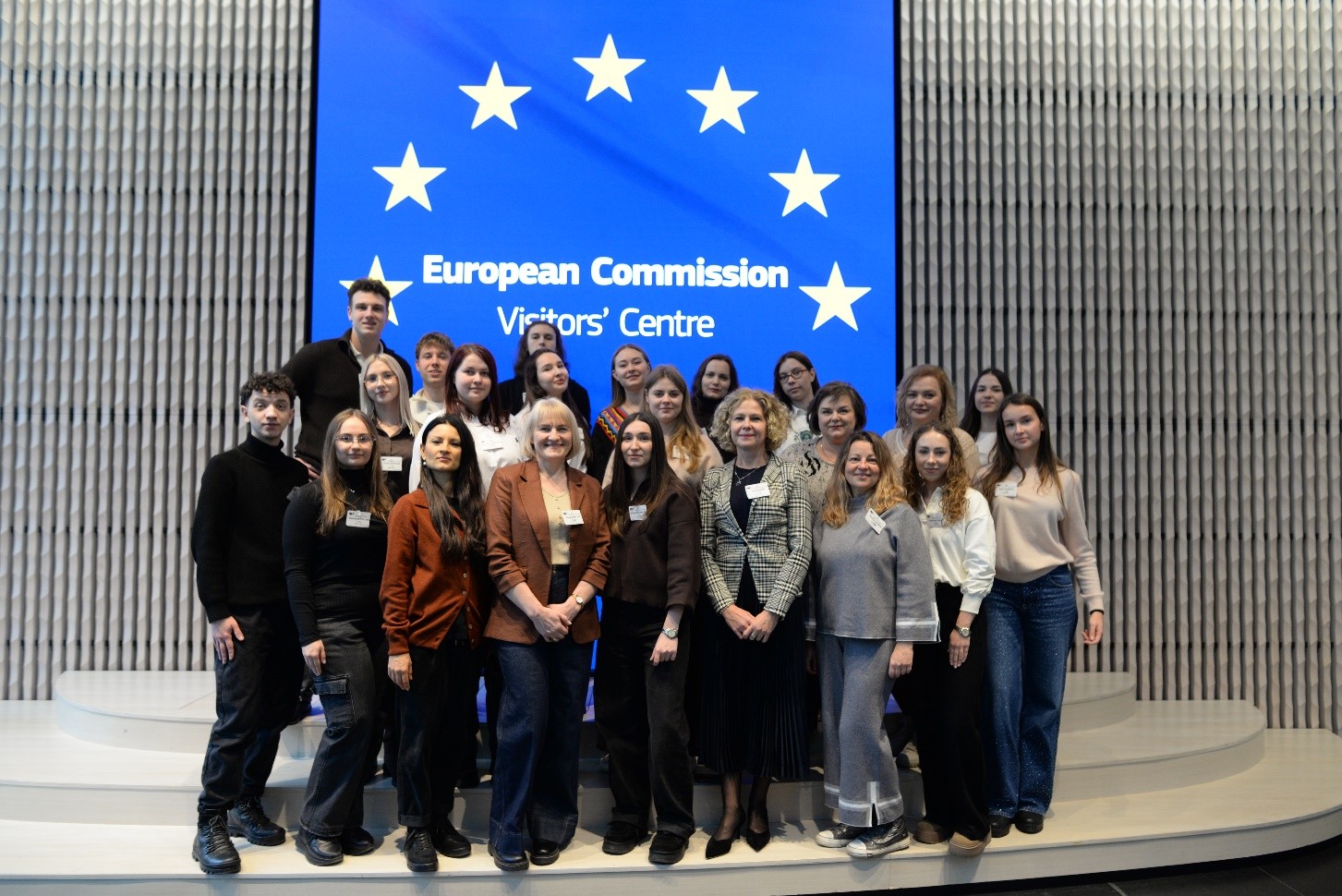
We invite you to study the second (master's) level educational program “Interpreting” at Lesya Ukrainka Volyn National University. This is a unique opportunity to combine high-quality, professionally oriented education with the chance to visit and practice interpreting skills at European institutions.
Yulia KRYUKOVA, Associate Professor at the Foreign Languages for Natural and Mathematics Departmen, member of the OP Interpreting working group
Iryna CHARIKOVA, Associate Professor at the English Philology Department, guarantor of the OP Interpreting
Iryna BISKUB, Professor at the Applied Linguistics Department, Dean of the Foreign Philology Faculty
Photo by Bohdan KACHMARYK, Applied Linguistics, Foreign Philology Faculty
Translated by Iryna Charikova
Facebook: https://www.facebook.com/profile.php?id=61582070181057
Instagram: https://www.instagram.com/interpretersroom?igsh=MWpzZHowOXF5bGhpMA==